
What your public IP can reveal — and what it cannot
Your public IP is an address websites receive when you connect. It can provide useful information about the network, but it is not the same as your physical address and does not identify a person by itself.
What information may appear
A network lookup can associate the IP with a country, approximate region or city, time zone, ASN and the organization that owns that ASN. Cloudflare documents these fields for requests passing through its network. On home, mobile, corporate or VPN connections, the displayed name may belong to the network operator, an infrastructure company or an intermediary rather than the retail brand you recognize.
IP location is approximate
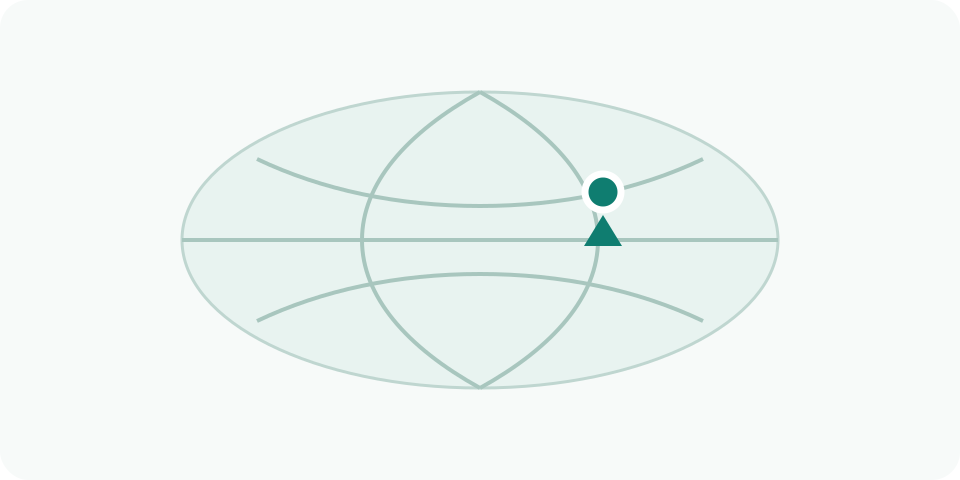
IP geolocation should not be interpreted as an exact point on a map. MaxMind, one of the best-known specialist providers, explains that this kind of geolocation is inherently imprecise and should not be used to locate a household, street address or specific person. On mobile networks, VPNs and corporate connections the location may be even further from the actual user.
If a tool shows a city or marker, that does not mean it knows exactly where you are. It is an estimate associated with the network used for the connection.
Why your IP can change
Many providers assign dynamic addresses, mobile networks can change the egress used and a VPN will normally show the exit server's IP. That is why you may check your IP today and see a different one later without anything being wrong.
When knowing your IP is useful
- Check whether a VPN is changing your Internet exit point.
- Provide your public IP to technical support when legitimately requested.
- Check which provider or network organization is associated with your connection.
- Understand what basic information a website can receive when the connection is made.